
Intercultural Education and New Methodologies
New ways of learning in a global classroom in a globalized world.
Kursbeschreibung
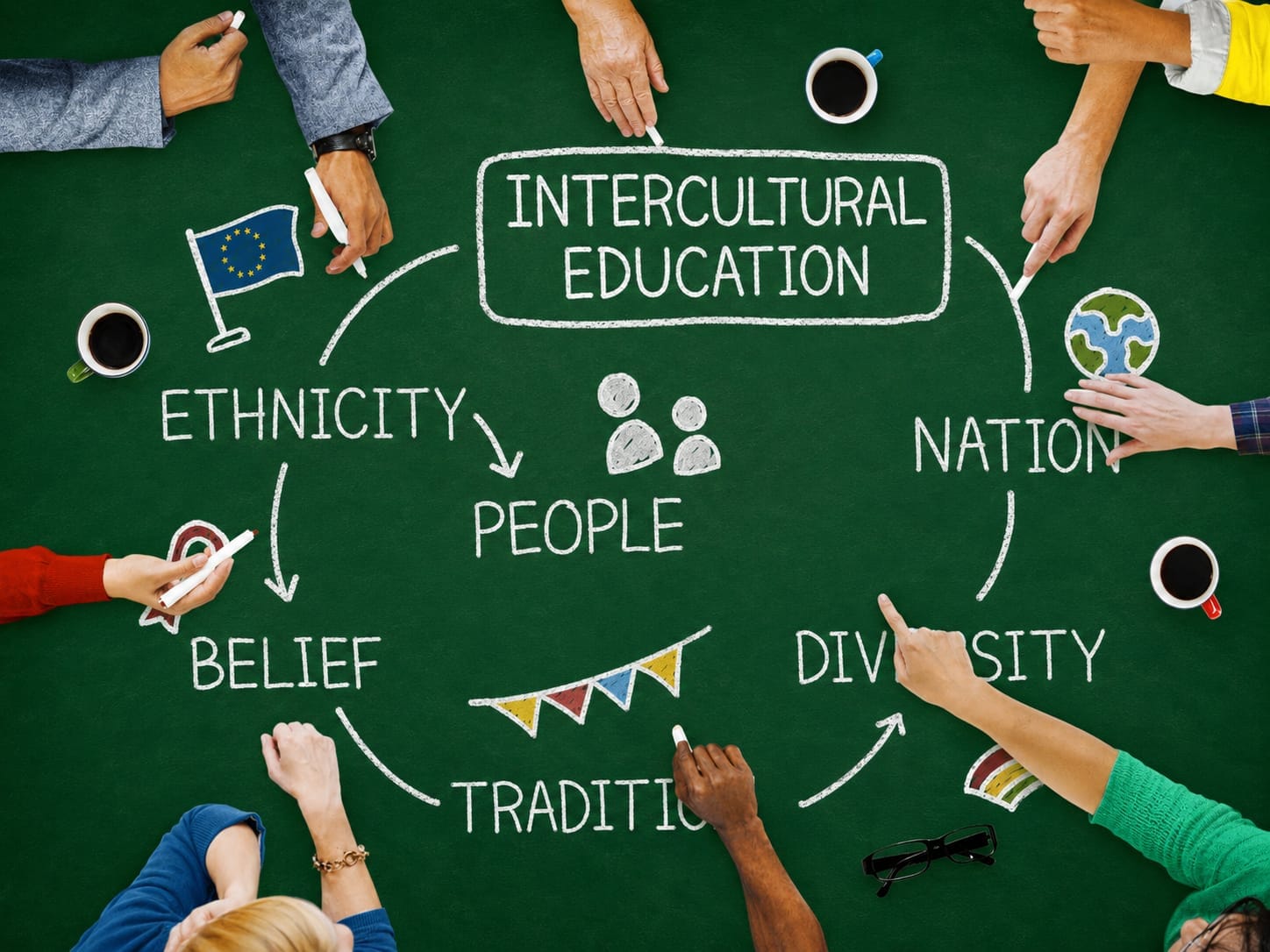
We live in a global world with people of different languages, traditions, and cultures living together and sharing the same space in increasingly open and diverse societies. Diversity is a challenge and an opportunity at the same time. It can produce problems of coexistence, or it could be an opportunity for learning and development. A fertile field of new ideas, cultural creativity, and economic enrichment.
Teachers of the 21st century have to cope with a growing diversity in their classrooms. Dealing with cultural diversity is perhaps the greatest pedagogical and educational challenge of their careers and the key to the success or failures of our future societies. Learning how to explore, discover, and take advantage of all the cultural diversity present in our classrooms can be used as an opportunity to enrich our teaching and avoid through exercises of critical thinking all kinds of identity obsessions, superficial stereotypes, clichés, and harmful ideologies.
Lernziel
-Understand the basic characteristics of the different civilizations.
-Differentiate between ambiguous concepts and ideas: culture, nation, tradition, religion, ethnicity.
-Establish direct dialogue with families and students.
-Create activities, works, and methodologies that integrate cultural wealth.
-Build learning spaces for peace, respect, and understanding.
-Preventing and managing cultural conflicts
Unterrichtsmethoden und Leistungsbewertung
This course employs an active and participant-centered methodology to ensure practical learning.
Teaching methods combine Digital explanation for presenting theoretical frameworks, Project-Based Learning (PBL) to help teachers design real intercultural activities for their classrooms, and Socratic dialogue to foster critical thinking, debate, and deep reflection on diversity. Assessment is continuous and formative, based on daily active participation, collaborative teamwork, and the presentation of a final educational project adapted to the participants' own school contexts.
Materialien und Lernressourcen
The course utilizes a blend of multimedia and traditional resources, though the true core relies on active dialogue and the exchange of ideas among participants.
• Digital Presentation & Multimedia: Interactive slides, visual schemas, and videos will be used to introduce concepts and spark group debates.
• Reference Materials: A curated bibliography, digital articles, and case studies will be shared with participants to deepen their learning.
• School Supplies: Every teacher will receive a ph
Kurspaket
EES provides comprehensive support including advice on accommodation and transport, tourist information, and an overview of the Spanish educational system. Depending on course dates, job shadowing at a local secondary school may be available. The package also includes a fully guided cultural and tourist visit to the historic city of Vélez-Málaga and its main monuments.
Kursprogramm
Introduction
The first day focuses on laying the groundwork for the course by examining the challenges and opportunities of 21st-century classrooms. Teachers will analyze how growing classroom diversity can transition from a potential source of conflict into a fertile field for learning and development. Through group discussions, participants will explore how to use critical thinking to dismantle superficial stereotypes, identity obsessions, and harmful clichés that often impact educational environments.
Concepts
This day is dedicated to clarifying the complex and often ambiguous vocabulary that shapes our understanding of human societies. Teachers will break down and differentiate between tightly intertwined terms such as culture, nation, tradition, and personal identity. By moving away from rigid labels, the sessions promote an understanding of the balance between public spaces and private family traditions, ensuring educators can navigate these concepts with nuance.
Civilizations
Participants will embark on a historical and cultural journey to understand the foundational characteristics of the world's great civilizations and global religions. The curriculum tackles heavy topics, including the origins of racism, xenophobia, and the lingering effects of the imperialist mind. By building this historical framework, teachers acquire the necessary knowledge to appreciate global diversity deeply and guide their students toward tolerance and genuine coexistence.
Global Classroom
This day transitions theory into practice by equipping educators with methodologies to build an intercultural classroom rooted in peace, respect, and mutual understanding. Using active strategies like Project-Based Learning and Socratic dialogue, teachers will design activities and works that integrate their students' cultural wealth. Special emphasis is placed on establishing effective, direct communication channels with diverse families to ensure a supportive community.
Cultural Visit
The final day connects the course themes to a tangible local context through an educational excursion to the intercultural city of Vélez-Málaga. Renowned for its rich heritage and historical connection to Miguel de Cervantes—who lived here shortly before writing Don Quixote—the city serves as a living museum. Located in the heart of Andalusia near the Sun Coast, this visit highlights how historical cross-cultural influences shape modern public spaces and local identity.
Kursorte
Kursorte werden bei den einzelnen Kursterminen angezeigt.
Bewertungen
Noch keine Bewertungen vorhanden.
Deine Bewertung
Bitte melde dich an, um diesen Kurs nach deiner Teilnahme zu bewerten.