
Peace education
Inner peace, inclusion and conflict‑resolution tools for educators in peace education.
Course description
The Peace Education course focuses on practical ways to strengthen dialogue, inclusion and conflict‑resolution skills in everyday teaching. The programme examines how inner balance supports calm interaction and how teachers can guide learners to recognise emotions, cooperate and approach disagreements constructively.
The course is based on functional, participatory methods that can be applied directly in the classroom. Trainers have experience from the Teachers Without Borders network and have developed peace education materials for both international use and Finnish schools.
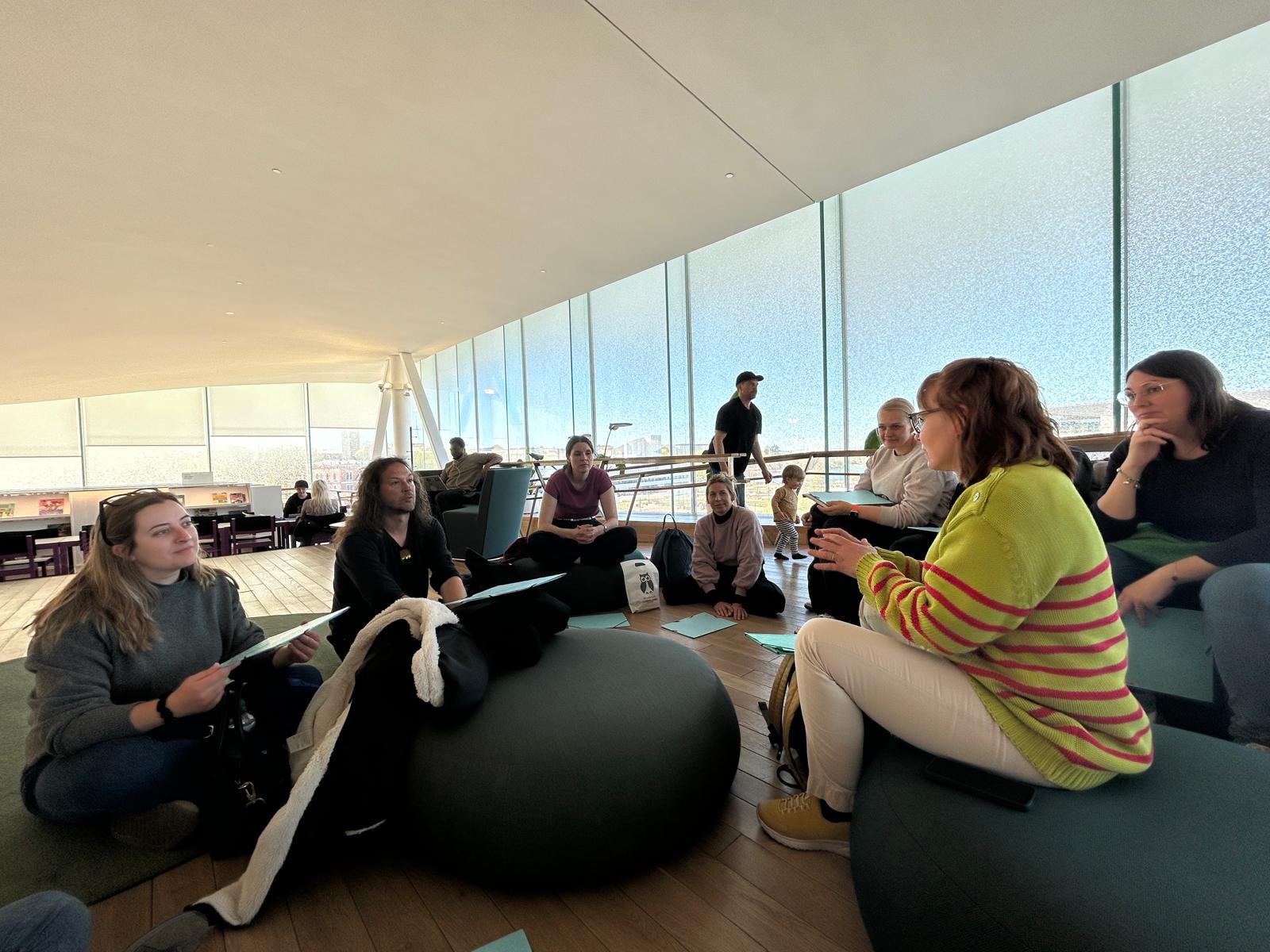
Participants explore examples of peacebuilders in their own communities, practise dialogue and negotiation situations, and consider different ways to support peaceful interaction. The aim is to provide educators with realistic, usable tools that fit their own teaching context and help prevent conflicts through clear structures, emotional skills and inclusive practices.
Learning objective
The goal of the course is to guide course participants to perceive the world through different perspectives, understanding and perceiving. The course aims to strengthen participants’ ability to apply peace education in everyday teaching through practical, functional methods. Participants learn to recognise how inner balance supports calm interaction and how to guide learners in identifying emotions, cooperating and approaching disagreements constructively.
The course develops skills in dialogue, negotiation and conflict prevention, with a focus on clear structures and inclusive practices.
By the end of the course, participants will be able to plan and implement simple peace education activities, use functional exercises to support emotional and social skills, and integrate conflict‑resolution approaches into their own teaching context in a realistic and age‑appropriate way.
Teaching methods and assessment
The course is based on functional and participatory methods that support calm interaction, dialogue and inclusive learning. Teaching alternates between short inputs, guided discussions and practical activities that help participants observe inner balance, practise dialogue and explore ways to prevent conflicts in everyday school situations. The programme includes reflection on peacebuilders from participants’ own environments and consideration of factors that support peaceful behaviour. Methods are simple and adaptable so that participants can apply them in their own teaching contexts.
Assessment is continuous and reflective. Participants complete brief reflections during the course to connect each activity to their own work and to identify which approaches are useful for supporting emotional skills, cooperation and constructive interaction. At the end of the course, participants outline a small, realistic plan for how they will integrate selected peace education elements into their t
Materials and learning resources
The organiser provides all basic materials needed for the course, including paper and simple supplies used in reflection and dialogue activities. Participants may use their own phone or laptop to access course materials or complete short written tasks. All resources support functional, inclusive work on inner balance, dialogue and conflict prevention, and can be adapted to everyday teaching.
Course package
The course fee includes the full programme and all teaching according to the weekly schedule. Basic materials needed during the course are provided by the organiser. Travel, accommodation and meals are not included in the price. Participants may book accommodation directly at the course venue: https://www.tehtaanhotelli.fi/en/
Course programme
Welcome
9.00 -11.00 Beginning of the course, practical matters, and review of the week's program. Getting to know each other and grouping. 11.00-12.00 lunch 12.00 - 15.00 Going through the pre-assignment. What is peace? What is conflict? Familiarization with concepts and their meanings.
Inner Peace
9.00 - 11.00 Theory and practical exercises about inner peace. Emotions: How to build students' faith in the future. 11.00. 12.00 lunch 12.00 - 15. 00 Finding peace in nature (forest walk).
Communication
9.00 - 11.00 Theory and practical exercises on different ways of communication. Learning to look at different perspectives. 11.00 - 12.00 lunch 12.00 - 15.00 Dialogue practices. Nonviolent communication (Rosenberg's model).
Taking Action
9.00 - 11.00 How to plan a project with students. 11.00 - 12.00 lunch 12.00 - 15.00 How can I use the course content in my teaching? Joint planning of course participants based on the course content.
A Day in Helsinki
10.15 - 16.00 (morning bus 8.40 Karkkila - Helsinki) How does urban planning/construction promote peace in the community? City orienteering Handing out certificates, giving feedback, and ending the course.
Course locations
Reviews
No reviews yet.
Your review
Please log in to review this course after attending.