
Project-Based Learning in Practice
Design, run and assess authentic student projects that fit your curriculum.
Course description
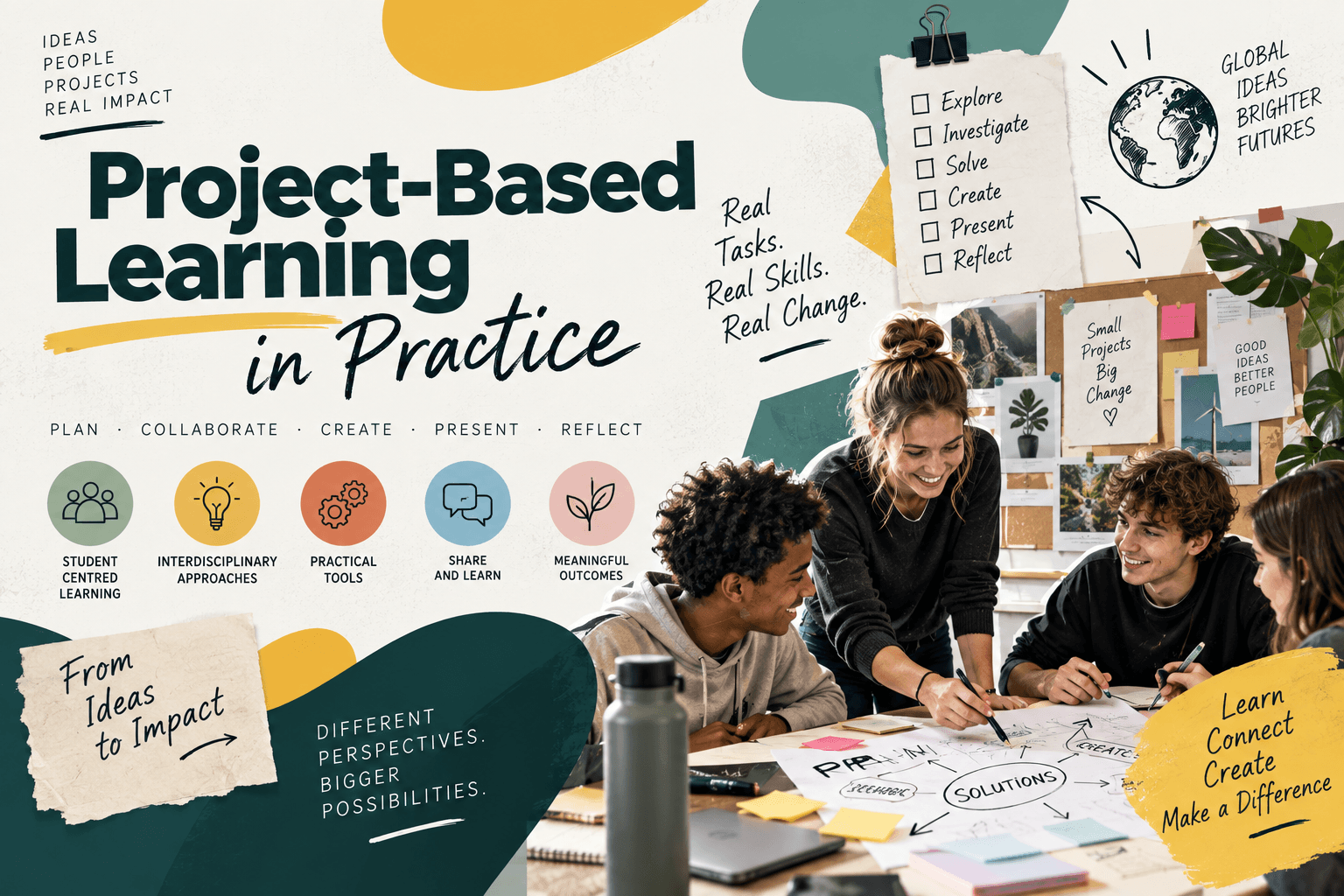
Project-Based Learning (PBL) turns curriculum content into meaningful, student-driven work. In this hands-on course you will experience a complete PBL cycle yourself: from a driving question and project launch to milestones, feedback loops and a public product. We look at how Italian and Nordic schools organise PBL within a normal timetable, how to keep projects rigorous, and how to assess both content and 21st-century skills. You will leave with a fully planned project for your own class, ready-to-use planning templates and a network of colleagues from across Europe. Suitable for primary and secondary teachers of all subjects; no previous PBL experience required.
Learning objective
Participants will be able to plan a standards-aligned PBL unit with a driving question, milestones, formative checkpoints and a final product, and to assess it with clear rubrics. They will also be able to argue for PBL in their own school and adapt it to their national curriculum.
Teaching methods and assessment
Methods: experiential learning, design sprint in small international teams, gallery walks, peer critique, structured reflection and a school visit. Assessment: daily exit tickets, peer feedback on project drafts using rubrics, final presentation of the participant's own project plan on the last day, self-assessment against the course objectives.
Materials and learning resources
Printed and digital course handbook, PBL planning templates (Word/Google Docs), rubric bank, example projects from partner schools, Padlet course board, curated reading list. Participants bring their own laptop or tablet.
Course package
25 hours of training, course materials, certificate of attendance, Europass Mobility and Learning Agreement support, pre-departure info pack, welcome get-together, guided walking tour of Florence, coffee breaks, 24/7 emergency contact during the course week.
Course programme
Welcome and the PBL mindset
Icebreakers and school presentations from all participants. What makes a project 'gold standard' PBL? Analysis of real student projects. Formulating driving questions for your own subject.
Planning the project
Backward design: from learning outcomes to product. Building milestones, checkpoints and a project calendar. Team work on the participants' own project drafts, first peer feedback round.
Managing projects in the classroom
Group formation, roles, contracts and conflict management. Scaffolding research and collaboration skills. Visit to a partner school in Florence to observe PBL in a normal timetable.
Assessing projects
Formative assessment during a project: critique protocols and feedback. Designing rubrics for content and skills. Grading fairly in group work. Presenting to an authentic audience.
Presentation and transfer
Each participant presents their project plan in a gallery walk. Final feedback, planning the first steps back at school, Erasmus+ documentation and course evaluation. Certificate ceremony.
Course locations
Reviews
No reviews yet.
Your review
Please log in to review this course after attending.