
Coding and Robotics for Every Subject
Start coding and educational robotics with students, even without any programming.
Course description
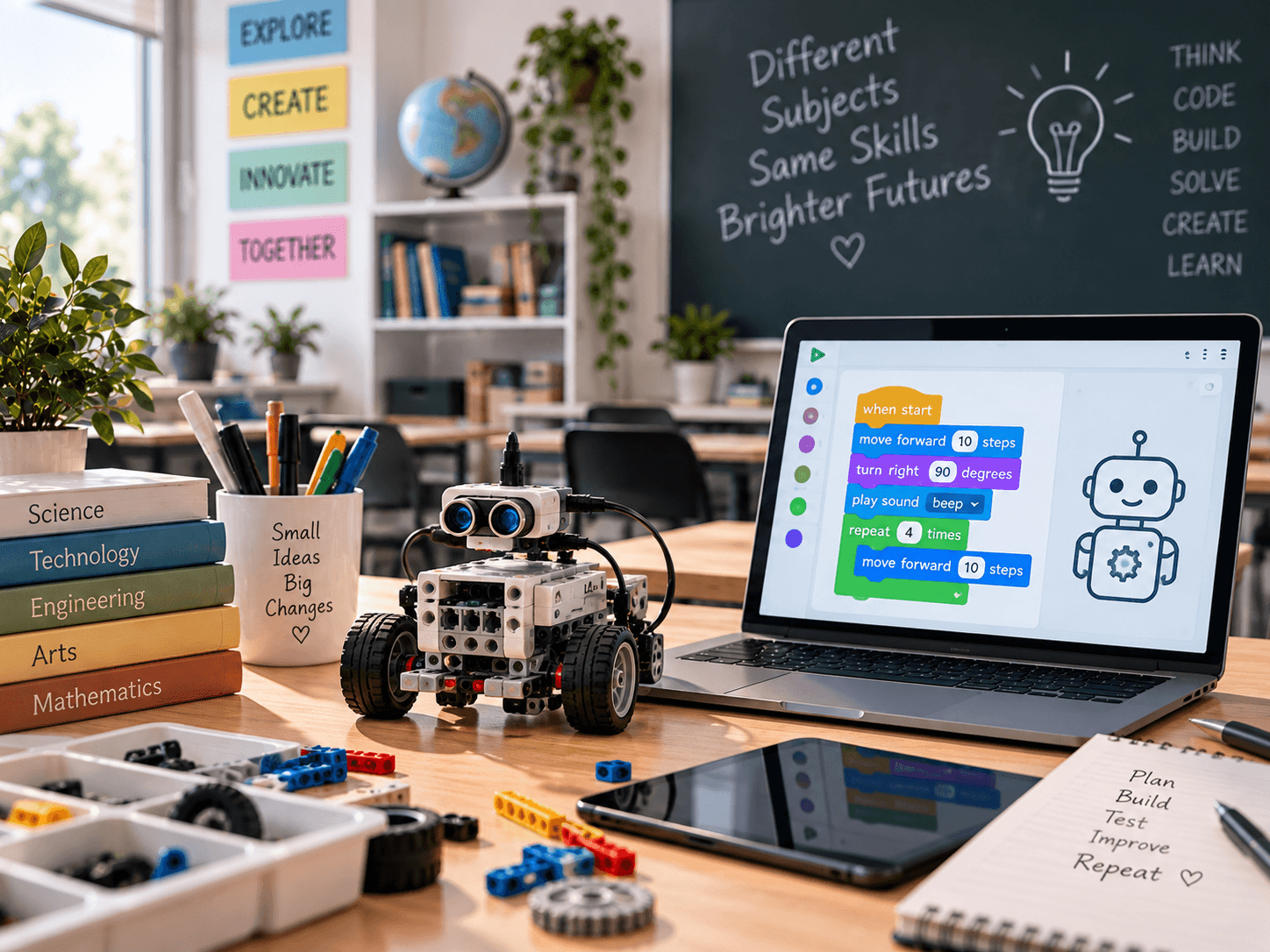
Computational thinking is a basic skill, and coding does not have to be limited to computer science lessons. In this beginner-friendly course you learn to use Scratch, micro:bit and simple educational robots (such as LEGO Education and mBot) to teach maths, science, languages and art. You will build small projects yourself, learn how to structure coding lessons, differentiate for mixed-ability groups and assess computational thinking. A visit to an Estonian school shows how programming is integrated from primary level upwards. Suitable for primary and lower secondary teachers of any subject; no prior coding experience required.
Learning objective
Participants will be able to teach basic programming with Scratch and micro:bit, use educational robots in cross-curricular projects, plan a sequence of coding lessons for their own subject and assess computational thinking skills.
Teaching methods and assessment
Methods: pair programming, project-based workshops, unplugged activities, trainer modelling, school visit, lesson planning in teams. Assessment: participants build and present a small coding or robotics project and a lesson plan; daily check-out; peer and trainer feedback.
Materials and learning resources
Course handbook, Scratch and micro:bit project cards, robotics kits provided during the course, lesson plan templates, unplugged activity collection, links to free online resources. Participants bring a laptop.
Course package
25 hours of training, use of robotics kits and micro:bits, course materials, certificate of attendance, Europass Mobility and Learning Agreement support, old town guided tour, coffee breaks, pre-departure info pack.
Course programme
Computational thinking and first steps in Scratch
Welcome and participant presentations. What is computational thinking? Unplugged activities. First Scratch projects: animations and quizzes for your subject.
Scratch projects across the curriculum
Storytelling, maths games and science simulations in Scratch. Differentiation and debugging strategies. Planning a Scratch lesson.
Physical computing with micro:bit
Introduction to micro:bit: sensors, LEDs and radio. Projects for science and maths. School visit: coding in an Estonian primary school.
Educational robotics
Working with educational robots: line following, obstacle courses and storytelling with robots. Group projects. Assessing computational thinking.
Project fair and transfer
Participants present their projects and lesson plans. Peer feedback. Planning a coding lesson sequence at home, Erasmus+ documentation, evaluation and certificates.
Course locations
Course locations are shown for each course date.
Reviews
No reviews yet.
Your review
Please log in to review this course after attending.