
Digital Tools for Blended and Interactive Learning
A curated digital toolbox and a clear model for combining online and classroom work.
Course description
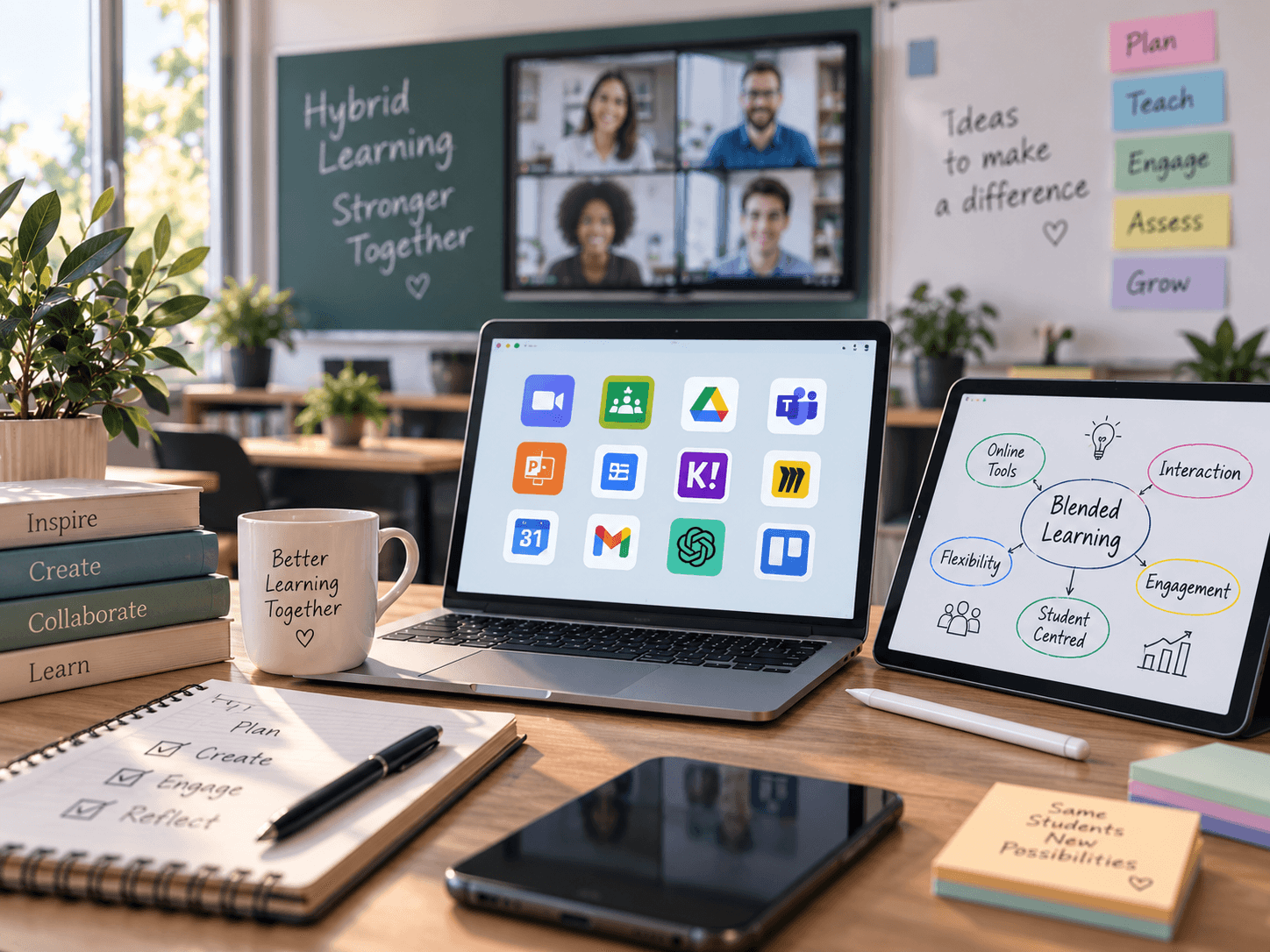
There are thousands of educational apps, but only a few make a real difference. This course presents a curated set of tools for interactive lessons, collaboration, feedback and blended learning, and, more importantly, a pedagogical model for choosing and combining them. You will build a blended learning unit for your own subject, learn to create interactive content and short videos, and design online tasks that students actually complete. We look at how Estonian schools organise blended learning and at accessibility and data protection. Suitable for teachers of all subjects and levels who want to move beyond ad-hoc use of digital tools.
Learning objective
Participants will be able to select digital tools based on pedagogical purpose, design a blended learning unit combining classroom and online phases, create interactive content and videos, and use digital tools for collaboration and feedback in an accessible and GDPR-compliant way.
Teaching methods and assessment
Methods: tool try-outs in a flipped format, design workshops, peer teaching, school visit, screencast production. Assessment: presentation of the participant's blended learning unit, peer review with a checklist, daily reflection in a shared digital journal.
Materials and learning resources
Course handbook, curated tool list with pedagogical notes, blended learning unit template, video production guide, accessibility checklist, GDPR summary for tool selection. Participants bring a laptop and headphones.
Course package
25 hours of training, course materials, certificate of attendance, Europass Mobility and Learning Agreement support, old town guided tour, coffee breaks, pre-departure info pack.
Course programme
Purpose before tools
Welcome and participant presentations. A model for choosing digital tools (SAMR and beyond). Mapping your current practice. Try-out: interactive presentation and quiz tools.
Blended learning design
Models of blended and flipped learning. Designing online phases that students complete. Participants start their own blended unit.
Creating content: video and interactive materials
Producing short explanatory videos and screencasts. Interactive worksheets and Canva for teachers. School visit to observe blended learning in practice.
Collaboration, feedback and inclusion
Digital collaboration boards, peer feedback tools, e-portfolios. Accessibility and data protection. Refining the blended unit.
Showcase and transfer
Participants present their blended learning units. Peer review with checklist. Transfer planning, Erasmus+ documentation, evaluation and certificates.
Course locations
Course locations are shown for each course date.
Reviews
No reviews yet.
Your review
Please log in to review this course after attending.