
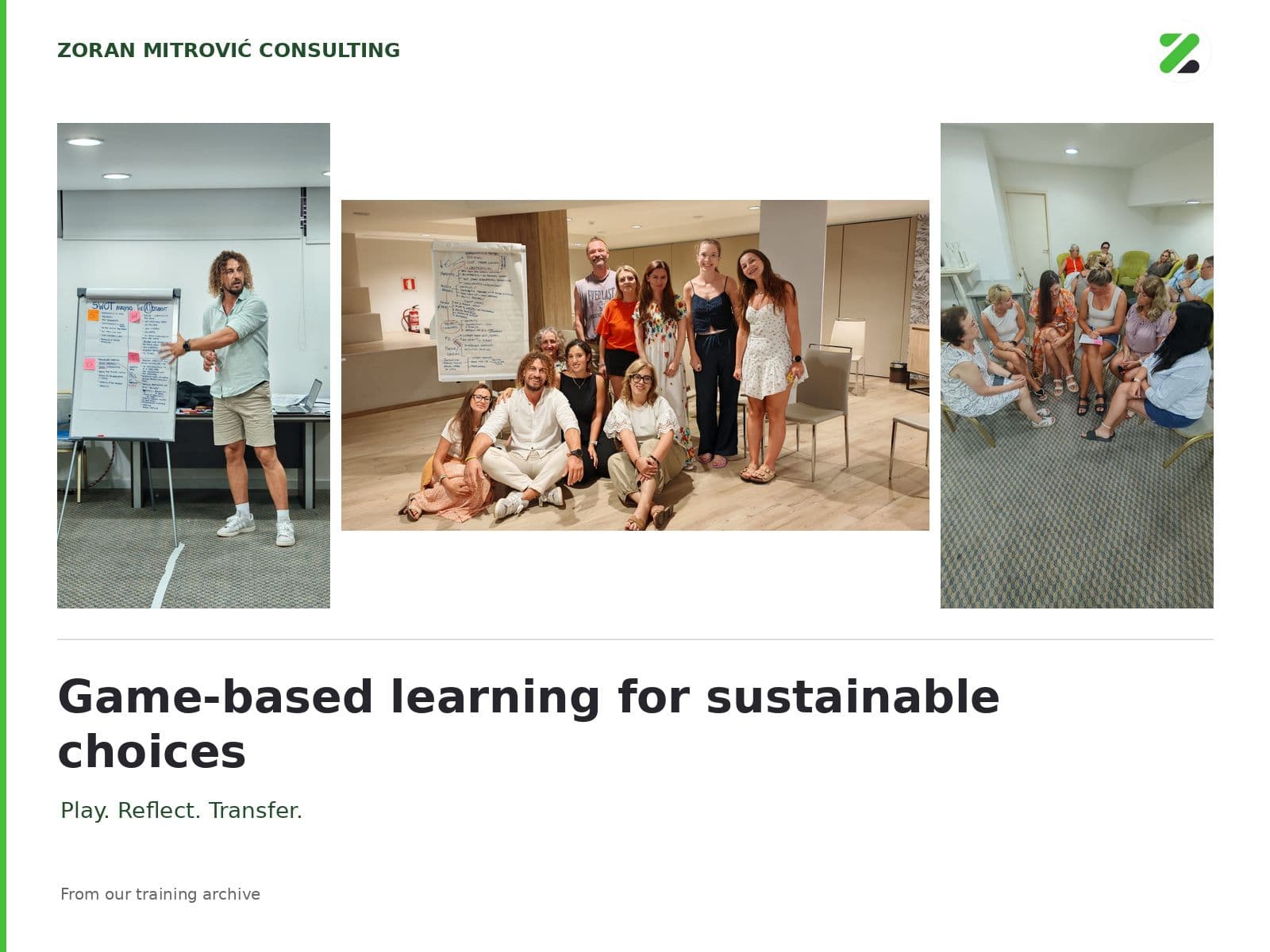
 1 date available
Apr 12, 2027 - Apr 16, 2027
Game-based learning for sustainable choices
Build and test cooperative sustainability games, then connect play to learning.
Las Palmas, SpainEnglish5 days
€400View course
Design accessible outdoor activities through nature, cooperation and sustainability.
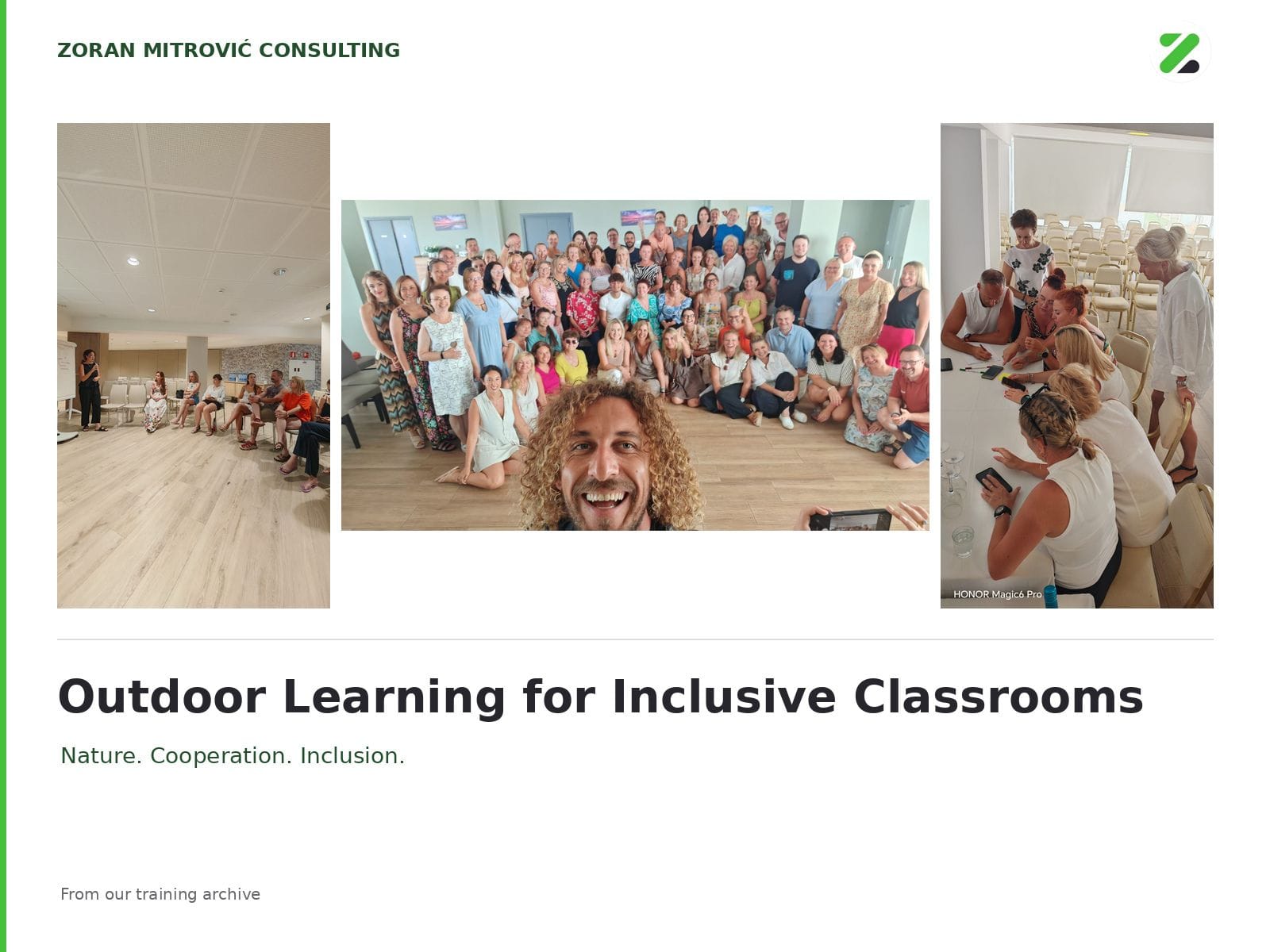
Location: Gran Canaria, Spain.
Design accessible outdoor activities through observation, cooperative games, peer facilitation and reflection. For teachers, VET educators and youth workers. Take home a plan to adapt to your school.
Trainers
Zoran Mitrović works in environmental education, youth work and EU projects with O2 por la vida and Eko Fun Kamp. His experience includes outdoor activities, sustainability workshops and educational games.
Aránzazu Rodríguez Mederos coordinates EU projects with O2 por la vida. Her work includes non-formal learning, inclusion and intercultural facilitation. She holds a master's in professional interpreting and intercultural communication (ULPGC).
Proposed: 5 days, 25 facilitated hours. Tuition: EUR 400/person; accommodation, meals and transport excluded. Planned dates are provisional; exact venue and cancellation terms require confirmation. Access needs must be discussed. No school visit or accredited qualification is promised.
By the end of the proposed course, participants should be able to:
- Design a place-based activity with a clear learning goal, group roles and a way to check learning.
- Adapt instructions, pace and roles for different needs without forcing personal disclosure.
- Recognise common outdoor risks and prepare an accessible alternative, with specialist advice where needed.
- Facilitate a cooperative sustainability game and connect experience to classroom learning through reflection.
- Apply respectful consent practices for community contact, photos and sharing learner work.
- Create and peer-review a lesson or workshop plan for their own organisation.
Field observation, small-group design, role-based scenarios, game prototyping, micro-facilitation and reflective discussion. No activity requires public sharing of personal learner data.
Proposed formative assessment: starting self-assessment, an activity checklist, peer feedback after facilitation, and a final revised plan. Evidence: an activity outline, access/risk review, game prototype and transfer plan. No accredited qualification is promised.
Proposed resources: activity-design sheet, access/risk-review template, observation prompts, feedback rubric and reflection cards. Participants bring one teaching challenge; paper-based participation remains possible. Before delivery: confirm venue permissions, accessible route, weather plan, safeguarding and emergency arrangements. These are planning needs, not confirmed package inclusions.
Tuition: EUR 400/person, five days/25 hours. Accommodation, meals, travel and transfers excluded; extras require a separate offer.
Planned groups: 10-23 participants. Non-binding enquiries; delivery confirmed separately.
Schools/companies may request dedicated training or other dates. Larger groups: email z.mitrovic@zoranmitrovicconsulting.com or contact us via the platform. Send dates, group size and goals; venue, adaptations and group quote agreed separately.
From place to learning
Map a local place as a learning environment. Agree group rules, identify participation barriers and define a curriculum-linked question. Practise observation and reflection. Output: a place-based activity brief.
Inclusion and safer participation
Adapt instructions, roles, pace and routes for different needs. Work through weather, access, safeguarding and emergency scenarios. Build an indoor alternative. Output: an access and risk-review checklist.
Sustainability through games
Prototype a low-resource cooperative game about consumption or local environmental choices. Test rules, avoid misleading environmental claims and connect the game to a learning goal. Output: a tested game and debrief questions.
Community and intercultural learning
Design a respectful local challenge using observation, cultural perspectives and responsible travel. Practise consent for interviews and photos. A community visit requires a confirmed partner. Output: a community-learning task with a no-visit alternative.
Facilitation, evidence and transfer
Facilitate a short activity for peers, collect feedback and revise it. Assemble an evidence portfolio, agree one realistic school action and plan a follow-up reflection. Output: a ready-to-adapt lesson or workshop plan.
No reviews yet.
Sign in to review this course. If you booked as a guest, use the personal link in your review email.
More courses
Explore more published courses from this provider.
1 date availableBuild and test cooperative sustainability games, then connect play to learning.
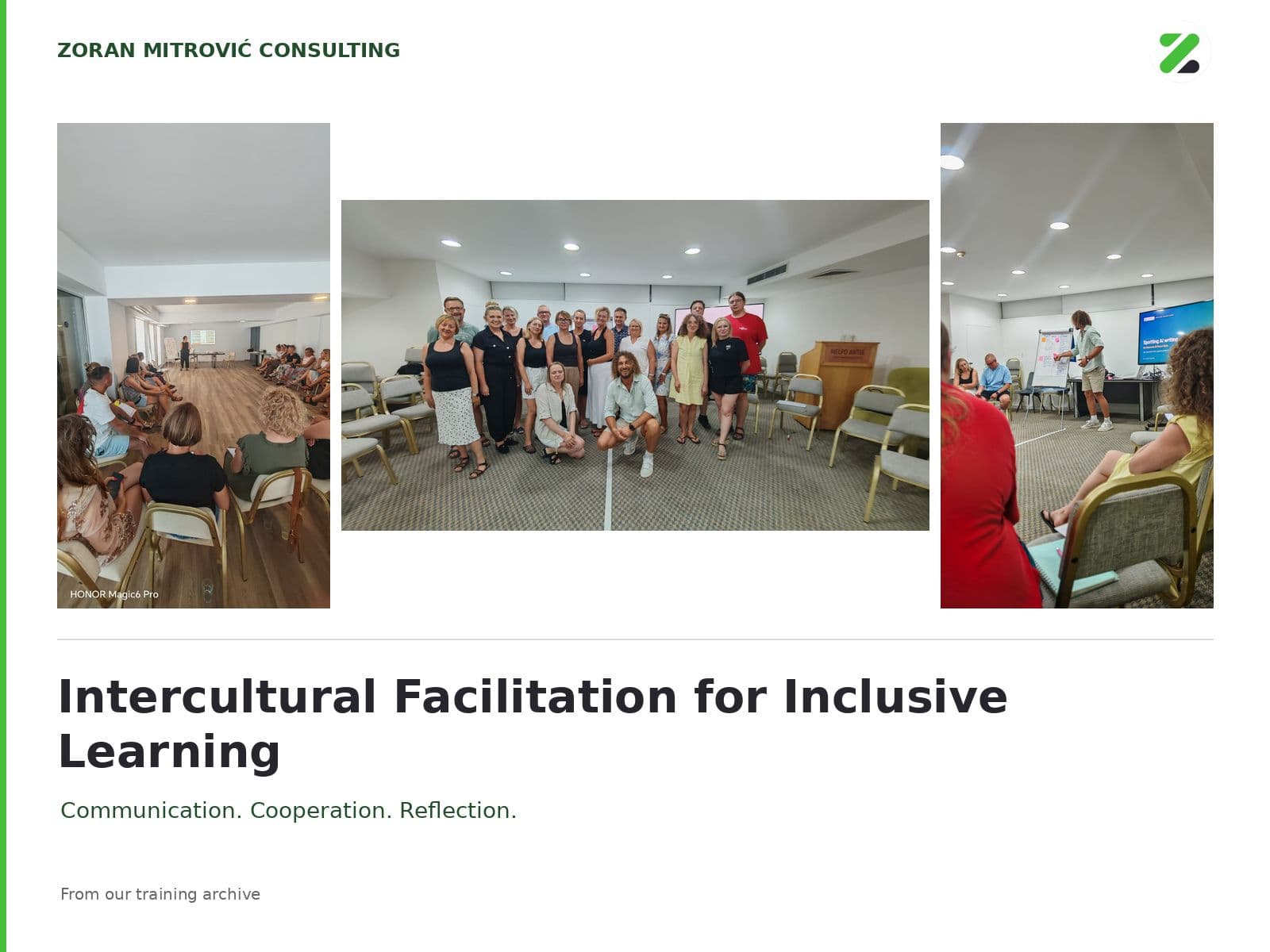 1 date available
Design inclusive group activities through communication, cooperation and reflection.
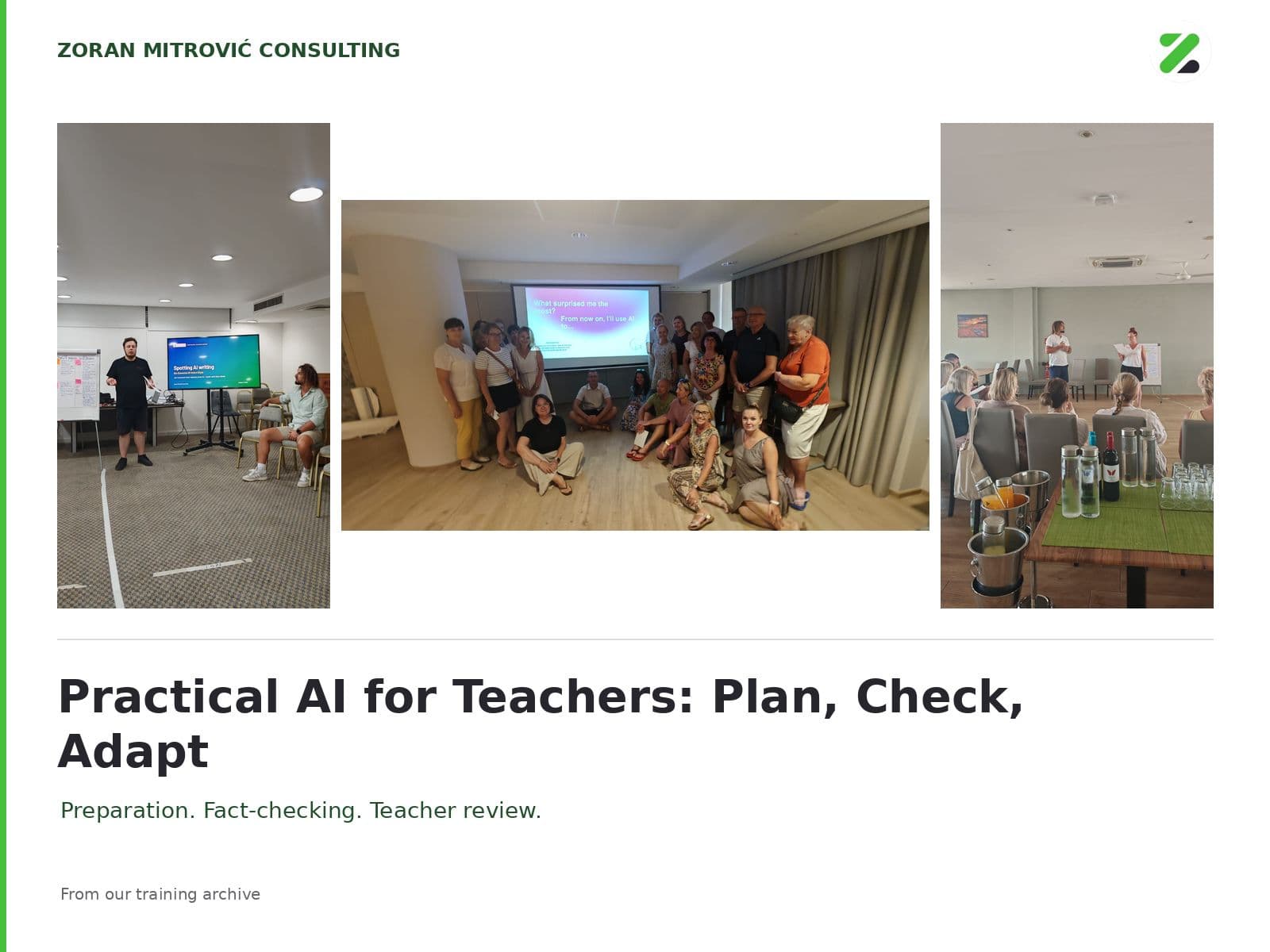 1 date available
Practise AI-assisted preparation with fact-checking, privacy and teacher review.
Include every learner and support emotional needs in diverse classrooms.
Design real-world projects that build collaboration, creativity and critical thinking.
Teach safe, responsible, creative technology use and collaborative online culture.