
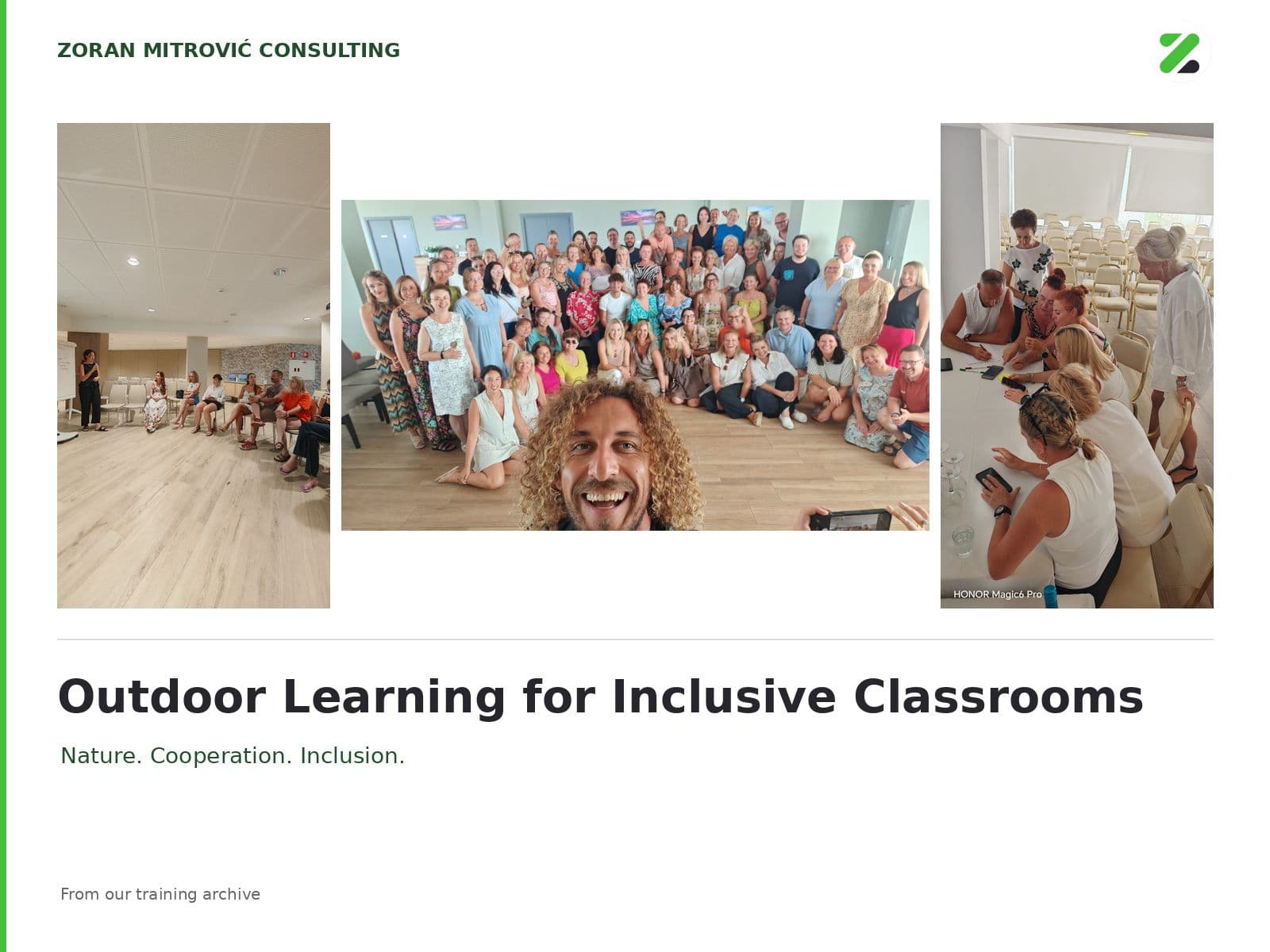
 1 date available
Apr 05, 2027 - Apr 09, 2027
Outdoor learning for inclusive classrooms
Design accessible outdoor activities through nature, cooperation and sustainability.
Las Palmas, SpainEnglish5 days
€400View course
Critical thinking and honest assessment in the AI era.
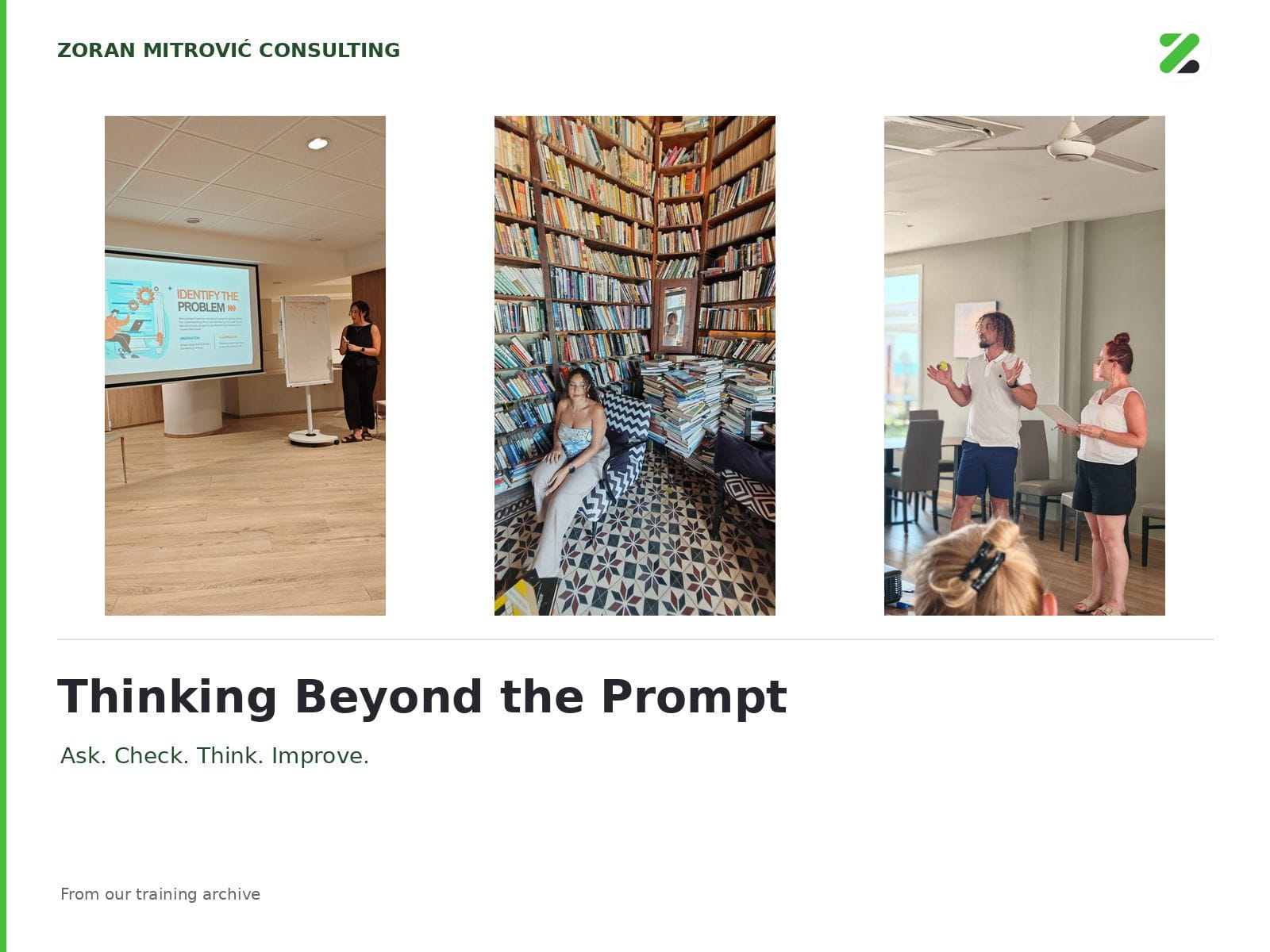
Location: Gran Canaria, Spain. For teachers and heads of department who want assessment to show what learners can really do when AI is available. Practise questioning, verification, planted-error tasks and fair with-AI/without-AI task pairs. Redesign essays and projects so drafts, explanations and classroom work make thinking visible. Discuss suspected misuse through evidence and school procedures. Style clues and AI-detector scores are not treated as proof of authorship. Exact venue, dates and cancellation terms require confirmation. No accredited qualification or detection guarantee is promised.
Teach learners to ask better questions, check answers and explain uncertainty. Design find-the-mistake and improve-the-answer activities. Redesign three assessments to show thinking through drafts, oral explanation and in-class stages. Set and explain a fair with-AI/without-AI boundary. Respond to suspected misuse with an evidence-based conversation and school procedure. Draft a class or department AI-use statement and a pilot plan.
Question ladders, prompt comparison, source checks, planted-error exercises, assessment redesign and student-conversation role-play. Compare human and generated writing to examine unreliable authorship assumptions. Assessment uses three redesigned tasks, a checking routine, a draft AI-use statement and peer feedback. Teacher judgment stays in grading; participants check current school and national assessment rules.
Question ladders, prompt vocabulary cards, planted-error and improve-the-answer templates, with/without-AI task pairs, assessment redesign checklist, student-conversation guide, AI-use statement and parent-letter templates.
Planned groups: 10-23 participants. Accommodation, meals, travel and transfers excluded; extras require a separate offer. Non-binding enquiries; delivery confirmed separately. Schools/companies may request dedicated training or other dates. Larger groups: email z.mitrovic@zoranmitrovicconsulting.com or contact us via the platform. Send dates, group size and goals; venue, adaptations and group quote agreed separately.
Questions and vocabulary
Build question ladders from description to evidence and uncertainty. Compare weak and strong prompts. Practise interviewing AI, then list claims that need independent verification.
Catch and improve mistakes
Build and swap a find-the-AI-mistake task. Use ask-check-think-improve and require explanations for corrections. Examine confident but unsupported answers and revise the task after peer testing.
Assessment that shows thinking
Audit a real assessment: what could AI do alone and what requires the student? Redesign three tasks with staged drafts, oral explanations and classroom work. Plan fair with-AI/without-AI alternatives and access adaptations.
Honesty, evidence and dialogue
Test weak assumptions about AI-looking writing. Prepare feedback and a conversation plan for two anonymised cases. Role-play asking learners to explain their process. Draft a department AI-use statement and declaration practice.
Whole-school alignment and practice lab
Redesign one real assessment and test it with a colleague as the student. Align cross-subject rules and draft a parent letter. Write a six-week pilot plan with review roles and evidence to collect. Present for peer feedback.
Course locations are shown for each course date.
No reviews yet.
Sign in to review this course. If you booked as a guest, use the personal link in your review email.
More courses
Explore more published courses from this provider.
1 date availableDesign accessible outdoor activities through nature, cooperation and sustainability.
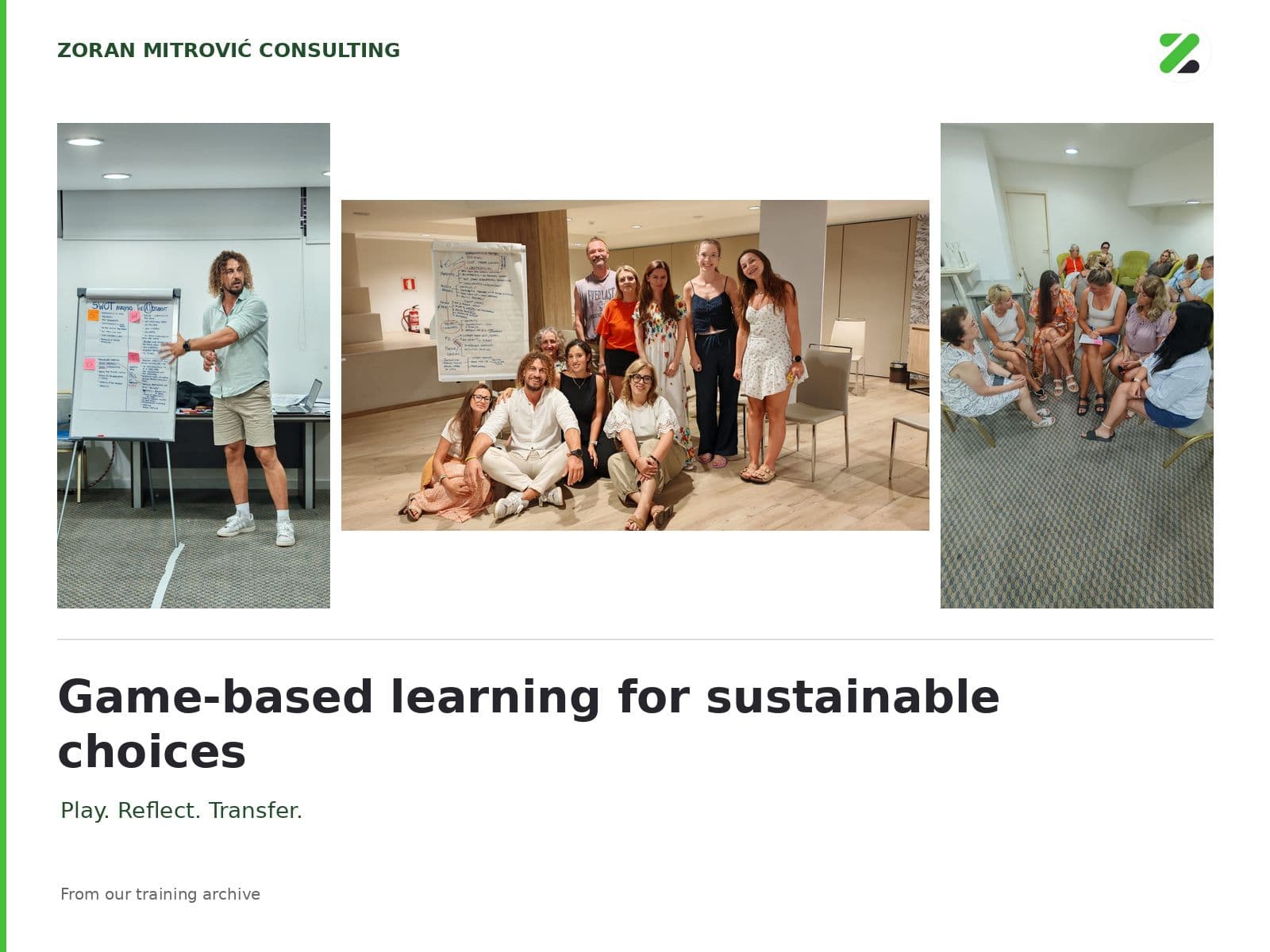 1 date available
Build and test cooperative sustainability games, then connect play to learning.
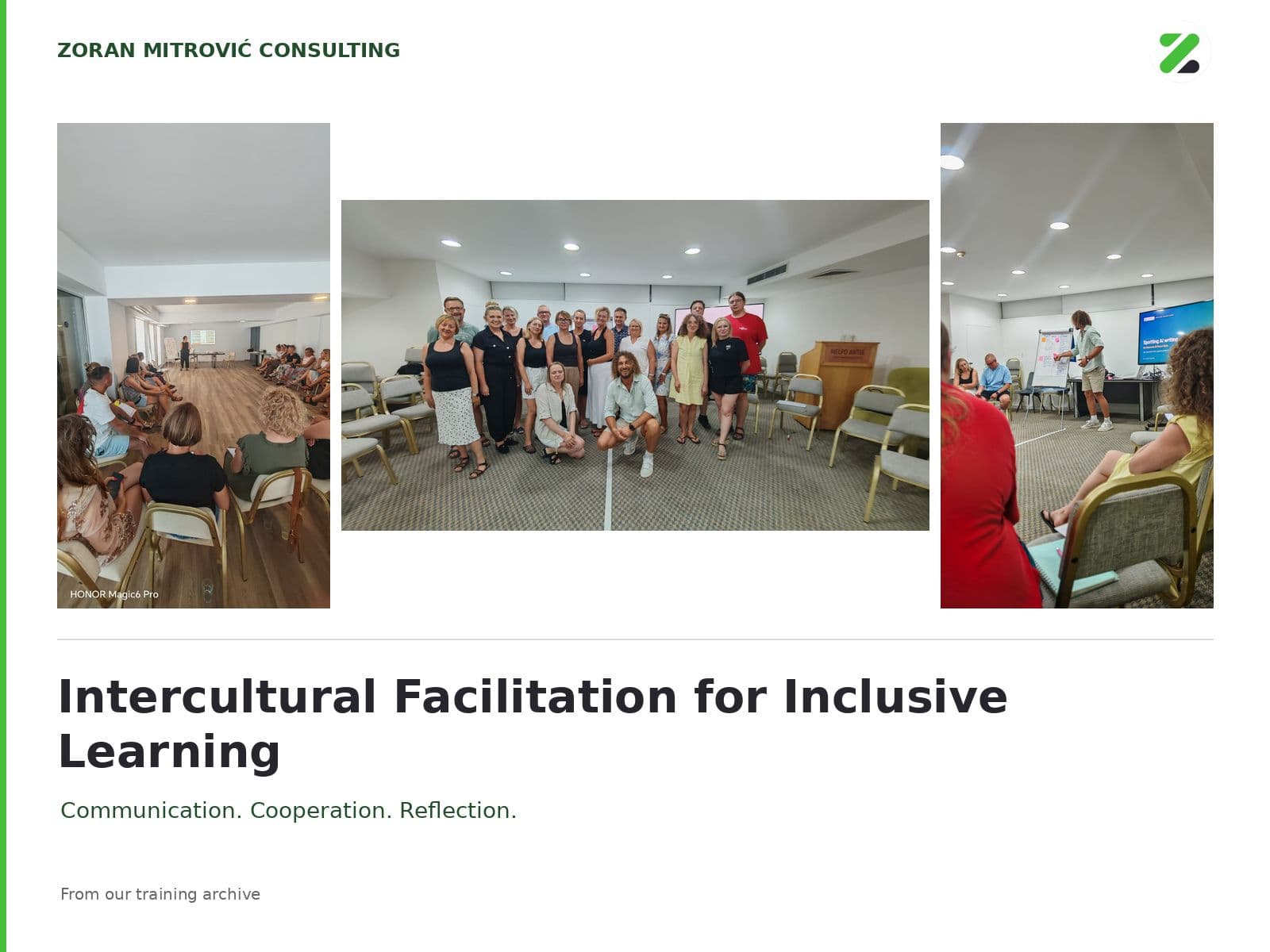 1 date available
Design inclusive group activities through communication, cooperation and reflection.
 1 date available
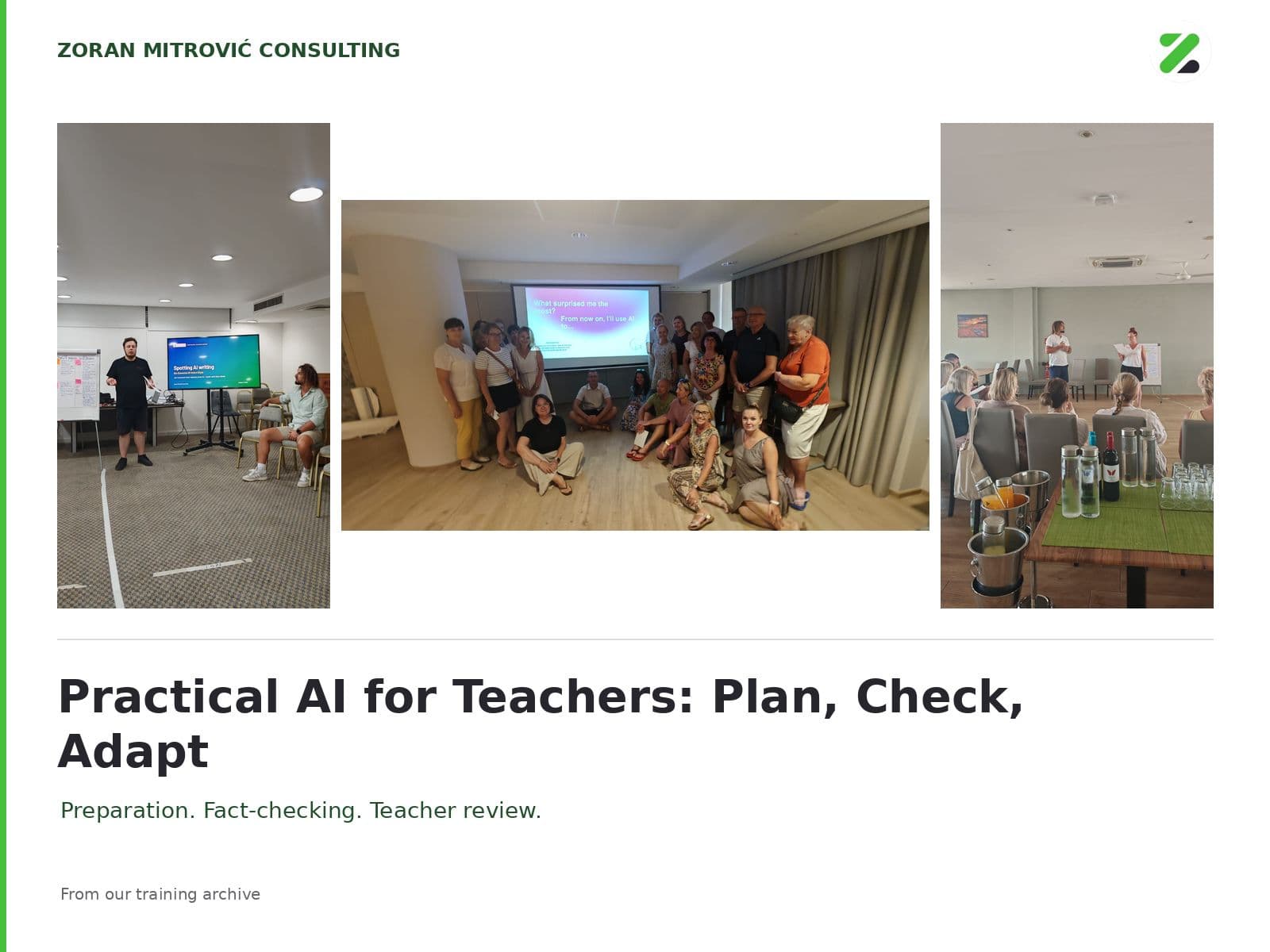
Practise AI-assisted preparation with fact-checking, privacy and teacher review.
Include every learner and support emotional needs in diverse classrooms.
Design real-world projects that build collaboration, creativity and critical thinking.